There are some birds which appear out of the mists of nowhere and then slip back into obscurity just as quickly.
Large-billed Reed Warbler was one, until it's recent rediscovery, singing happily in Afghanistan and apparently quite widespread across Central Asia.
Nechisar Nightjar, known from a single Ethiopian road kill, and Red Sea Cliff Swallow, known from a single bird killed at a Sudanese lighthouse, are two more that spring to mind.
And Sillem's Mountain Finch, a species first described in 1991 from two specimens which had spent 62 years gathering dust in a drawer of similar looking finches, having been collected in the Karakoram mountains by a Dutch expedition. A not-very-exciting-looking dull grey bird, from a very exciting but hard to get to part of the world. And then never seen again.
Until this summer, when a passing wilderness trekker in western Qinghai had a spot of foot poisoning and took a day out to rest, and snapped some (brilliant) photos of some finches feeding near his tent.

Monday, October 22, 2012

Wednesday, October 17, 2012
Wildlife News: 17th October 2012
 |
| Pel's Fishing Owl photographed in the Okavango Delta, Botswana |
While some of us are stuck in the office, it's good to know that others are out there enjoying some great wildlife!
Some truly amazing extralimital 'rarity' records in recent weeks have included Africa's first Black Skimmer (35 days after one was watched flying south past a Co Mayo headland in August); Europe's first Eastern Kingbird on the Co Galway island of Inishmore; another amazing autumn of American birds arriving on the Azores, including such mouthwatering goodies as White-eyed Vireo, Dickcissel, Wood Thrush, Golden-winged Warbler and Lincoln's Sparrow... and no doubt more to come; a Pel's Fishing Owl feeding on goldfish from a Cape Town pond, some 2000km away from the nearest breeding population; a couple of rare Siberians in the form of an Eastern Crowned Warbler on Heligoland in Germany and a Rufous-tailed Robin in Denmark; and also from Denmark, and perhaps most remarkable of all, the first Wolf seen in that country since the last Danish wolf was shot in 1772!
New for 2013: Sierra de Grazalema
More from Charlie in southern Spain:


"The olive trees in the orchard situated at the head of a valley near the village of Montejaque, were full of fat olives � they would be harvested in December; the almonds, though, were ready for collection. Yesterday they were collecting the seeds of the Carob. This is a particularly scenic valley, with much birdlife in it. Black Redstarts, Stonechats, Blue Rock Thrush, Rock - Bunting - Thrush and - Sparrow are common here as are flocks of Red-billed Choughs, their tetchy calls echoing from one valley side to the other. I heard a bird of prey calling from high up on a cliff face but couldn�t spot it. Bonelli�s Eagle, Eagle Owl and Peregrine can all be seen here. Crag Martins wheeled around above my head appearing and disappearing into the cliff�s craggy shadows
In spring, the Afro-Iberian species, Ornithogalum reverchonii (a Star of Bethlehem) is spotted here on the rock face together with Saxifraga bourgaena. Today a few Autumn Snowflake (Leucojum autumnale) provided some discrete contrast against the brown vegetation, their pendulous, white flowers tinged with the merest of pink at their base; they were much more evident yesterday along the path to Salto del Cabrero, growing in tiny bunches alongside the equally tiny Autumn Squill and the ubiquitous Bullate or Autumn Buttercup (Ranunculus bullatus)."
Tuesday, October 16, 2012
Coming Soon...
Colchicum troodi, a lovely Cypriot endemic currently in flower in the Troodos mountains (as photographed here by our fantastic local guide Yiannis Christofides). In a month's time this plant will be flowering at lower elevations, just in time for our November visit to the island.


New for 2013: Gibraltar and Grazalema
Continuing the theme of new destinations, Charlie Rugeroni is currently in the Sierra de Grazalema in Andalucia, sorting out the itinerary for next spring's visit to the area...
"The day broke with a soft blanket of low cloud over the village of Grazalema, but this imperceptibly lifted to reveal the �pueblo blanco� in all its glory bathed in warm, golden-syrup coloured early morning light. This is a tightly packed pueblo in the middle of the Parque Natural de Grazalema, lying at around 1,654 metres, amongst well eroded limestone and small areas of acidic rock.
There is plenty to see around the village including its old mule tracks and backdrop of cliffs; much of the plantlife was dead, dormant or gone to seed but the profusion of plants and diversity was clearly evident � as were the Red-billed Choughs and Rock Buntings accompanying my every move. Even in death, or near death, some wildflowers manage to look good and this is true of the Spanish endemic Centaurea clementei(a yellow-flowered Knapweed). Only the fresh-ish leaves of the crucifer Biscutella frutescens, an Afro-Iberian endemic, were visible below the dead frothy and once yellow flower-heads.
The Southern Colchicums (Colchicum lusitanicum) have been out in full bloom and nowhere showing better than at Llanos del Republicano (the largest polje in the Park) where they were protected from the south-westerlies coming up the valley � surprisingly, they�ve been left alone by the roaming quadrupeds � I hope to see Natterjack Toads here in the spring and the elegant Paper-white Daffodil (Narcissus papyraceus) growing along the stream banks. A particularly charismatic Spanish plant is Echium albicans, a few examples still retained their pink-white and blue flowers.
As a youngster I�d dreamed of dancing with wolves (at a distance) but now at my age, the best I could do on this trip was walking with pigs in the dehesa; the pasture land combined with Holm and/or Cork Oak standards. At the Salto del Cabrero (Shepherd�s Leap) I came across the dainty looking narcissus, N. humilis (syn. cavanillesii), it stood no more than three or so inches high.
At the top of Puerto del Boyar, near Puerto de las Presillas (1,300m) I couldn�t but help stumble on the �cushions� of Erinacea anthyllis (Hedgehog Broom), armed with weapons of mass protection (lethal sharp spines) of its leaves and lilac-blue flowers out next spring. Limestone pavements provided the backdrop to this confident looking plant with a �Make my day� punk�, sort of look given to any grazing Spanish Ibex or sheep. Swallowtails were around as were a myriad of blues and coppers and Graylings. Black Redstarts and Black Wheatears have been plentiful � a group of four was the highlight, as was the Bonnelli�s eagle at Manga de Villalengua (Sleeve of Villalengua), an impressively wide gorge 20 mins. away from Grazalema."

Grazalema awakes

Colchicum lusitanicum

Hedgehog Broom Erinacea anthyllis in the Sierra de Grazalema

The delicate Narcissus humilis

Some wonderful ham in the making...
More details of our April 2013 visit to the mountains, together with Gibraltar should be available soon after Charlie's return to the UK.
Monday, October 8, 2012
New for 2013: Northern Lights in Iceland
Another new trip for us next year, but this time to a familiar destination, just at a different time of year.
2013 is expected to be a peak in the cycle of solar activity which produces the spectacular display of lights, the Aurora Borealis or Northern Lights. We will be hoping for clear dark nights, to give us the best views of the stunning visual display. And during the daylight hours there's plenty to see too, with visits to the famous Geysir, impressive waterfalls and volcanic features, Iceland specialities such as Harlequin, Barrow's Goldeneye and Gyrfalcon all likely to be seen, together with a very good chance of Orca and/or Humpback Whales hunting herring close in to shore.
With our first Northern Lights trip already fully booked, we are now taking bookings for a second departure, on 8th to 13th April 2013. The trip is limited to just 8 people, so please get in touch soon if you'd like to be one of those 8!


All photos copyright Andy Jones, Iceland Naturalist.
Friday, October 5, 2012
New for 2013: Macedonia
We're currently hard at work on finalising the details for our 2013 holiday programme. Full details of the trips are being uploaded to the website as and when they are finished, and we'll soon be sending out a newsletter-cum-brochure to tempt you with.
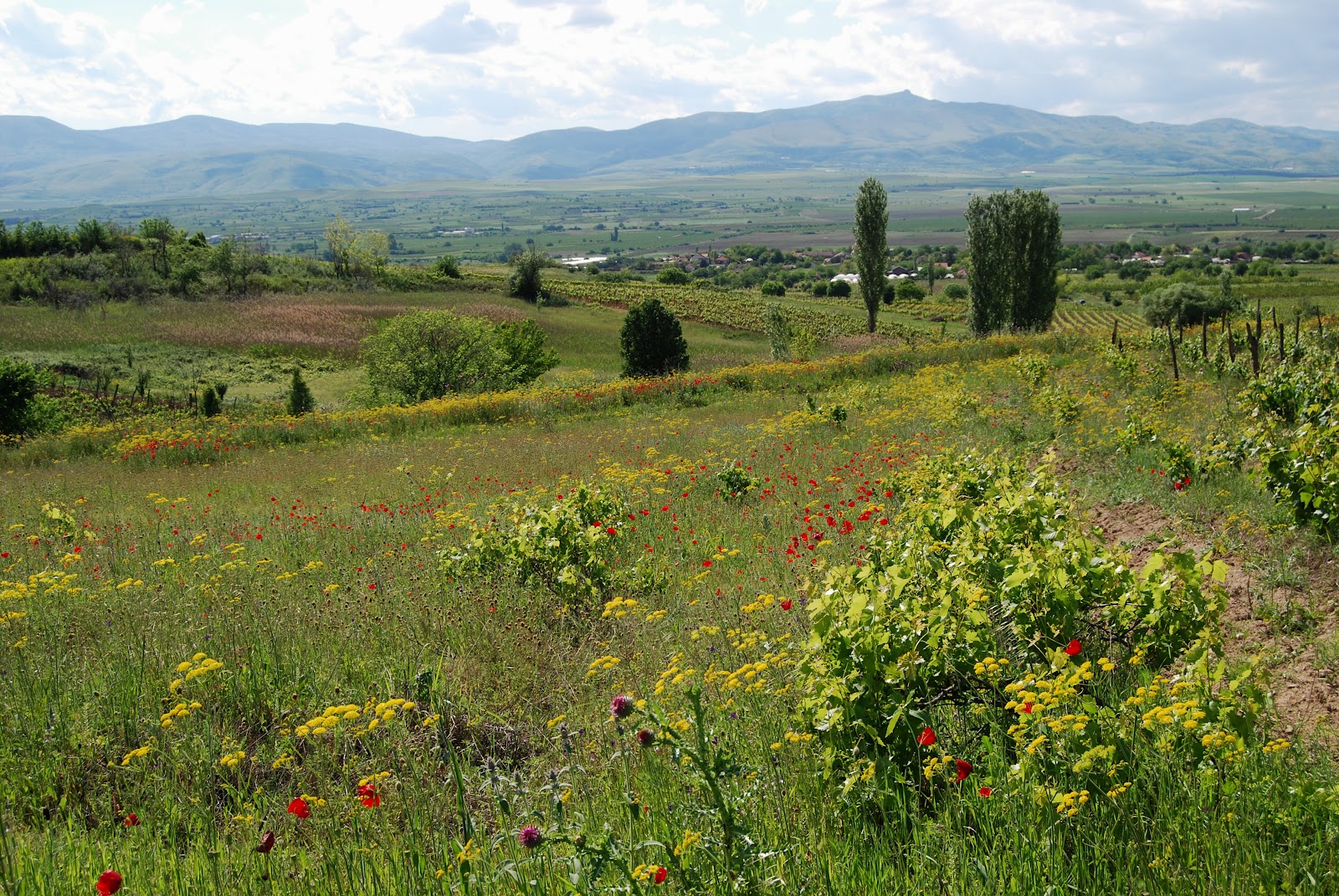
One new destination that I am particularly excited about is Macedonia (or, if we're going to be correct, the Former Yugoslav Republic of Macedonia). On paper it already sounds like a great place to visit: limestone mountains; extensive grazing still the norm; the world's largest breeding colony of Dalmatian Pelicans; Rock Partridge, Saker and Eastern Imperial Eagle all expected; Masked Shrike, Olive-tree Warbler; an amazing diversity of butterlies...
If I wasn't already sold on the idea, then the photos that Martin (our guide for this trip, as well as our recent holiday to the White Carpathians) sent through sealed the deal. It's worth a visit for the poppy fields alone! See you there!!


All photos copyright Martin Hrouzek, Arnika Travel.
One new destination that I am particularly excited about is Macedonia (or, if we're going to be correct, the Former Yugoslav Republic of Macedonia). On paper it already sounds like a great place to visit: limestone mountains; extensive grazing still the norm; the world's largest breeding colony of Dalmatian Pelicans; Rock Partridge, Saker and Eastern Imperial Eagle all expected; Masked Shrike, Olive-tree Warbler; an amazing diversity of butterlies...
If I wasn't already sold on the idea, then the photos that Martin (our guide for this trip, as well as our recent holiday to the White Carpathians) sent through sealed the deal. It's worth a visit for the poppy fields alone! See you there!!




All photos copyright Martin Hrouzek, Arnika Travel.
Subscribe to:
Posts (Atom)